
The silent shift redefining gastronomy
Emerging kitchens are redefining the new food economy. More than a trend, they represent a strategic response to the cost pressure of traditional restaurant models and a real opportunity for chefs, operators, and founders seeking agility, innovation, and stronger restaurant profitability.
The origin and democratization of emerging kitchens
To understand emerging kitchens, we need to see them as a transformation in modern restaurant business models. They did not appear as a stylistic upgrade to gastronomy. They emerged as a practical response to a core challenge: lowering capital risk without reducing culinary ambition.
A traditional restaurant usually requires a heavy structure. By contrast, emerging kitchens operate with shorter cycles, lower upfront investment, and faster adaptation. That combination makes them especially attractive for culinary entrepreneurship.
They also democratize fine dining. A chef can now launch a tasting concept, test a seasonal menu, or develop a strong culinary identity without carrying the full fixed cost burden of a full-service venue. Excellence becomes less dependent on infrastructure and more dependent on execution.
Cost structure: traditional restaurant vs. emerging kitchens
| Factor | Traditional restaurant | Emerging kitchens |
|---|---|---|
| Initial CAPEX | High | Low to medium |
| Monthly OPEX | High and fixed | Flexible and variable |
| Break-even timeline | Longer | Faster |
| Financial risk | High | Controlled |
| Operational agility | Low | High |
| Ability to pivot | Limited | Very high |
The ecosystem of models: how emerging kitchens really work
Not all emerging kitchens operate in the same way. The term includes several formats with different business logic, specific advantages, and distinct risks. Understanding these differences is essential for improving restaurant profitability and making sharper strategic decisions.
Ghost kitchens: extreme efficiency and the experience debate
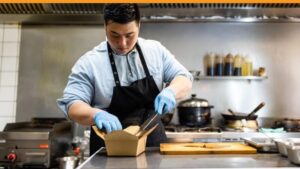
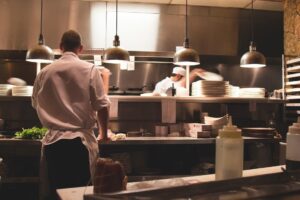
Ghost kitchens remove the dining room and focus entirely on production for delivery. They are one of the clearest expressions of emerging kitchens because they reduce structural costs and allow faster scaling.
Their biggest strength is efficiency: fewer non-productive square feet, better use of mise en place, and the ability to operate multiple brands from one production hub.
But the debate is real. Once the physical space disappears, part of the dining experience disappears with it. The brand is no longer lived in a room; it is discovered through a screen and judged through packaging, speed, and consistency.
Chef residencies: takeovers as strategy
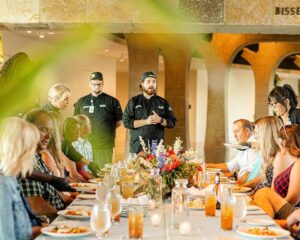
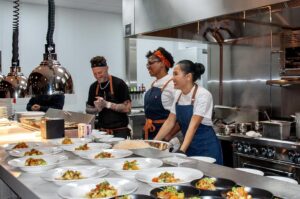
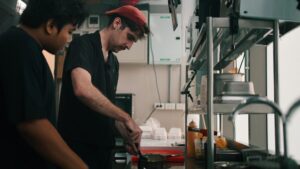
Chef residencies involve the temporary occupation of an already operating venue. A chef, collective, or concept takes partial or full control of a kitchen for a limited period.
Within the world of emerging kitchens, this format is powerful because it reduces CAPEX, uses existing infrastructure, and creates urgency through temporality. It also gives traditional restaurants a way to activate underused spaces or time slots.
Gourmet food trucks: mobile culinary labs
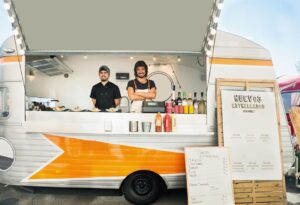
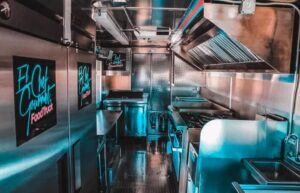

Food trucks have evolved far beyond the informal street-food stereotype. Today they can function as mobile precision units, branding tools, market-testing platforms, and vehicles for focused culinary concepts.
Inside the ecosystem of emerging kitchens, gourmet food trucks turn mobility into strategic advantage. Location stops being a fixed burden and becomes a tactical decision.
Supper clubs: exclusivity, storytelling, and scarcity
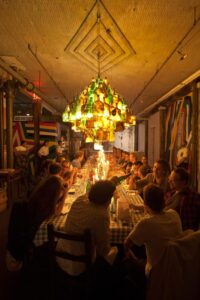
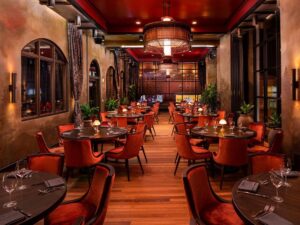
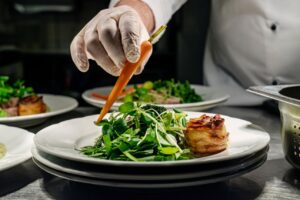
Supper clubs work through a different logic: limited seats, advance booking, intimate settings, and a strong narrative around the menu. They are one of the most emotional and exclusive forms of emerging kitchens.
Scarcity is not a limitation here. It is part of the value itself. Access to something rare increases demand, social conversation, and willingness to pay.
The digital currency: where emerging kitchens truly live
Many emerging kitchens do not depend on a prominent storefront, a major avenue, or a prime corner. Their real venue is Instagram, TikTok, and WhatsApp.
Digital visibility acts as a storefront, a discovery engine, a trust signal, and a conversion mechanism. In this context, attention becomes more valuable than foot traffic.
Pop-up restaurants don’t need a storefront. They need attention.
Instagram and TikTok function as:
• A discovery channel
• Social proof
• A conversion engine
The key phenomenon here is FOMO (Fear of Missing Out).
When a menu is available for only 3 days or has just 20 seats, the user doesn’t think it over… they react.
Key tools:
• WhatsApp waitlists
• Limited reservations
• Ephemeral content
Restaurants no longer compete for location; they compete for attention.
Innovation and territory: idea labs with urban impact
Emerging kitchens are also reshaping the urban map of gastronomy. They can activate municipal markets, industrial areas, shared courtyards, collaborative kitchens, and underused spaces that previously had no role in the dining conversation.
This shift creates real urban value. It opens new opportunities for culinary operators while helping revive areas that may have been commercially dormant.
Because they are not trapped by the pressure of a permanent critical audience or a static menu, emerging kitchens become true idea laboratories. They make it easier to test, adjust, fail fast, and relaunch with more precision.
Operational flexibility and creativity: less risk, more disruption
One of the biggest contributions of emerging kitchens is that they free creativity from structural pressure. When financial risk decreases, the room for experimentation grows.
That opens the door to more unusual ingredients, more disruptive menu formats, unexpected collaborations, and seasonal concepts that would be too expensive or uncertain in a traditional restaurant structure.
Operational flexibility improves culinary innovation. And when that innovation is well managed, it becomes a real competitive advantage.
Real sustainability: efficiency, just-in-time, and collaboration
Sustainability in hospitality often remains a narrative, but in emerging kitchens it can become an operational reality.
One of the clearest factors is just-in-time logic. By producing with tighter inventories and according to real demand, operators reduce waste and avoid overbuying stock with weak rotation.
Many emerging kitchens also embrace collaboration over competition: chefs sharing space, operators optimizing resources together, and support networks where circular logic becomes a practical tool for survival and growth.
This is not only about ethical positioning. It is also about efficiency, and efficiency remains one of the strongest drivers of long-term restaurant profitability.
Scalability and risk by model
| Model | Scalability | Operational risk | Initial investment | Flexibility |
|---|---|---|---|---|
| Pop-up restaurant | Medium | Low | Low | High |
| Ghost kitchen | High | Medium | Medium | High |
| Gourmet food truck | Medium | Medium | Medium | Very high |
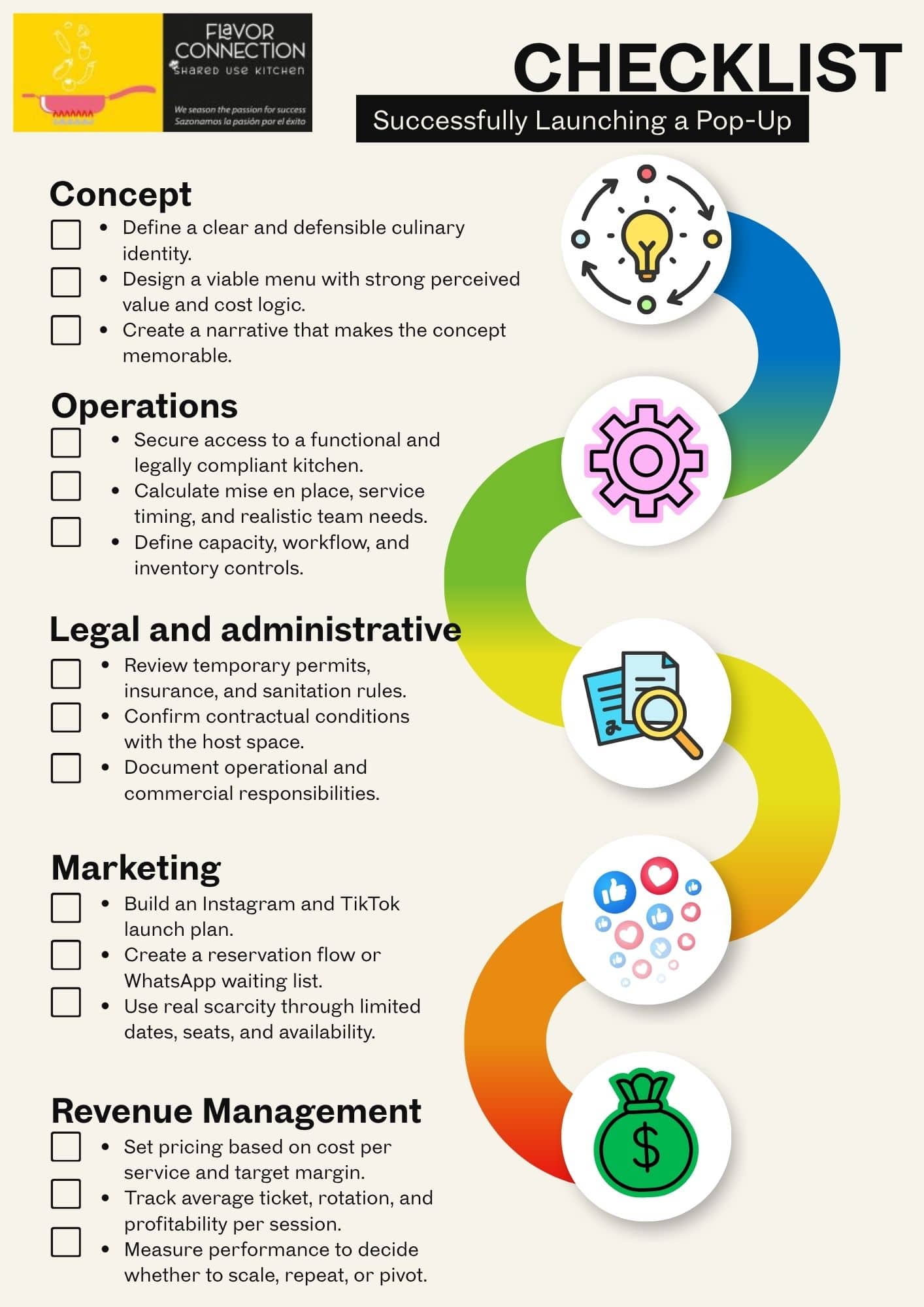
Checklist to launch a pop-up with discipline
Concept
- Define a clear and defensible culinary identity.
- Design a viable menu with strong perceived value and cost logic.
- Create a narrative that makes the concept memorable.
Operations
- Secure access to a functional and legally compliant kitchen.
- Calculate mise en place, service timing, and realistic team needs.
- Define capacity, workflow, and inventory controls.
Legal and administrative
- Review temporary permits, insurance, and sanitation rules.
- Confirm contractual conditions with the host space.
- Document operational and commercial responsibilities.
Marketing
- Build an Instagram and TikTok launch plan.
- Create a reservation flow or WhatsApp waiting list.
- Use real scarcity through limited dates, seats, and availability.
Revenue Management
- Set pricing based on cost per service and target margin.
- Track average ticket, rotation, and profitability per session.
- Measure performance to decide whether to scale, repeat, or pivot.
The reality check: challenges that should not be romanticized
It would be a mistake to present emerging kitchens as a perfect solution. They also carry important vulnerabilities.
In many cases, flexibility can hide fragility: weak contracts, lack of social protection, operational informality, and excessive dependence on platforms that absorb part of the margin.
In the dark kitchen segment, legal and regulatory gray areas still persist in many markets. That creates opportunities, yes, but also uncertainty. Not everything that grows fast becomes sustainable.
That is why the uncomfortable question still matters: do emerging kitchens represent sustainable innovation for hospitality, or are they becoming, in some cases, an attractive bubble for investment funds that prioritize scale over quality?
The answer is not binary. It depends on the model, the management, and the ability to build a real business beyond the excitement of the launch.
Flavor Connection as a strategic partner
Emerging kitchens require more than culinary talent. They demand operational judgment, market awareness, flexible structure, and the ability to turn a strong idea into a viable business model.
That is where Flavor Connection can play a distinctive role. Not only as a physical space, but as a strategic connector between creativity, operations, and commercial opportunity.
For culinary entrepreneurs, chefs in transition, and restaurant owners looking to pivot without destroying value, working with a partner who understands the rhythms, risks, and logic of emerging kitchens can make the difference between a temporary activation and a real business evolution.
The new food economy is already moving. The question is not whether to watch the change happen. The real question is how to enter it intelligently.
Frequently asked questions about emerging kitchens
What are emerging kitchens?
Emerging kitchens are flexible food business models that reduce fixed costs, lower entry barriers, and allow culinary concepts to be validated with more agility than a traditional restaurant.
What is the difference between a ghost kitchen and a pop-up?
A ghost kitchen is mainly designed for delivery and does not offer a physical dining experience. A pop-up creates a temporary in-person experience in a specific space, usually with a stronger sense of exclusivity and storytelling.
Are emerging kitchens profitable?
They can be, especially when they combine low CAPEX, controlled OPEX, smart pricing, and a clear demand strategy. Their advantage comes from flexibility, not improvisation.
Who benefits most from this model?
Chefs testing concepts, culinary entrepreneurs with limited capital, and traditional restaurant owners who need to pivot or open new revenue lines with less risk.
What role can Flavor Connection play?
Flavor Connection can act as a strategic partner by providing structure, operational flexibility, and a more favorable environment to launch, validate, and scale food concepts within the new economy of hospitality.

