
Food businesses are no longer competing only on taste, presentation and price. A growing number of consumers are also asking a different question: what does this food contribute to my overall well-being?
That shift is driving what could be described as intentional gastronomy: cooking not only to feed people, but to create food experiences associated with nourishment, functionality and lifestyle.
Fermented foods are estimated to represent roughly one-third of the food consumed globally. At the same time, gut health continues to gain visibility across nutrition, wellness and culinary innovation.
This is where Symbiotic Cuisine enters the conversation: an approach that intentionally combines probiotic and prebiotic foods within the same culinary ecosystem. For restaurants, virtual brands and emerging food concepts, the opportunity extends well beyond putting kombucha or kimchi on a menu.
Flavor Connection Insight: A food trend becomes commercially relevant only when customers understand it, enjoy it, reorder it and the operation can reproduce it consistently.
For entrepreneurs, this is not simply a nutrition topic. It is a roadmap for understanding, applying and potentially monetizing one of the most interesting intersections between culinary innovation, health-oriented consumption and operational efficiency.
Probiotics, Prebiotics and Synbiotics: The Fundamentals Every Food Operator Should Understand
Probiotics: Living Microorganisms
Probiotics are live microorganisms associated with the intestinal microbiota and its balance. Yogurt, kefir, sauerkraut, kimchi, kombucha, miso and tempeh are among the most familiar probiotic-associated foods.
From an operational perspective, there is an important limitation: microorganisms are sensitive to processing conditions, storage and temperature. If a concept wants to preserve live cultures, how the ingredient moves through the kitchen matters.
This means that developing probiotic-based menus for restaurants requires more than adding fermented ingredients to a recipe. Preparation, holding temperatures and service procedures all affect the final product.
Prebiotics: Fuel for Beneficial Bacteria
Prebiotics are not bacteria. They are food components that are not fully digested by the body and can be used by certain microorganisms as a substrate.
Garlic, onions, asparagus, artichokes, bananas, whole grains and legumes are practical ingredients for developing recipes with prebiotics without fundamentally redesigning a kitchen.
From a business standpoint, that matters. Many prebiotic-rich foods are familiar, versatile and relatively easy to integrate across multiple menu items.
Synbiotics: Combining Both Strategies
Symbiotic Cuisine brings probiotic and prebiotic components together within the same eating experience.
A simple example is plain yogurt with oats and chia seeds. In a commercial kitchen, the concept can evolve into bowls, sauces, breakfast products, fermented beverages and plant-forward menu items.
Table 1 — Probiotics, Prebiotics and Synbiotics: Key Differences and Culinary Applications
| Category | Primary Role | Culinary Examples | Commercial Applications |
|---|---|---|---|
| Probiotics | Provide live microorganisms | Yogurt, kefir, kimchi, kombucha | Beverages, toppings, sauces |
| Prebiotics | Provide substrates for microorganisms | Garlic, onions, oats, legumes | Bases, sides, bowls |
| Synbiotics | Combine both approaches | Yogurt with oats, grain bowl with kimchi | Complete dishes and functional concepts |
For operators, this distinction can also become part of the customer experience.
Tip for entrepreneurs: Explaining these concepts clearly on a menu can support perceived value without turning the dining experience into a nutrition lecture.
Fermented Foods: The Engine of Probiotic-Inspired Cuisine
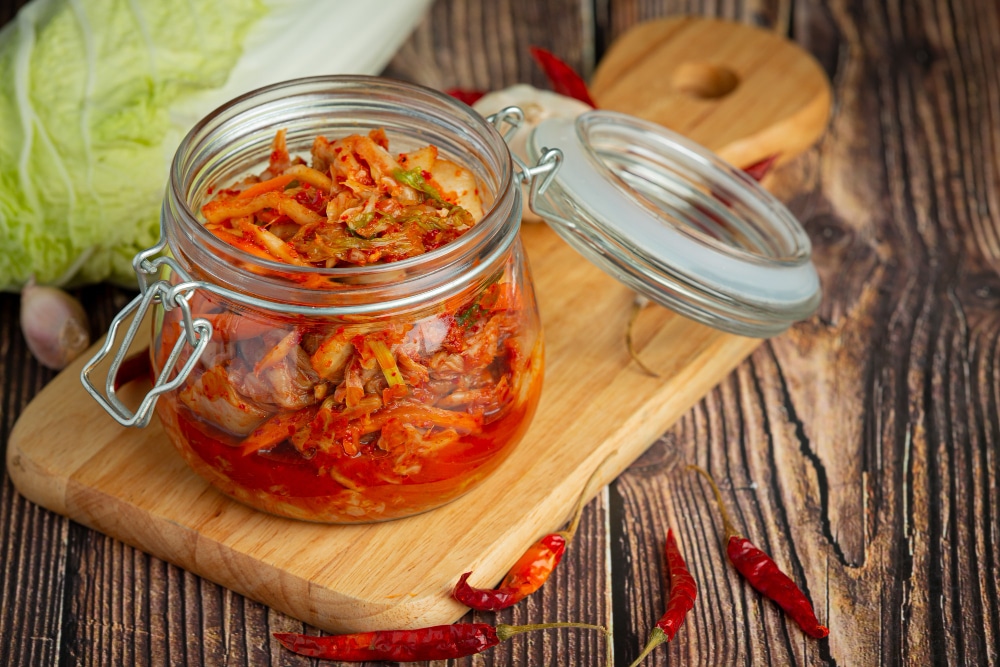
What Are They and Why Are They Everywhere?
Fermentation is anything but new.
Garum was consumed in ancient Rome, while bread, cheese, wine, coffee, tea and chocolate all depend in different ways on fermentation processes.
What has changed is how contemporary gastronomy is using fermentation. Research-driven restaurants such as Noma in Copenhagen and Mugaritz in San Sebastián have spent years exploring fermented ingredients as tools for building flavor.
That places fermentation among the ingredients of the future in the kitchen, even though the techniques themselves can be centuries old.
Fermented Foods Shaping Modern Menus
Kombucha, kimchi, miso and tempeh have moved far beyond highly specialized food circles.
Other products are being rediscovered. Garum has been reinterpreted by contemporary chefs, while ancestral products such as oxalis-based Andean fermentations demonstrate how traditional techniques can be reframed for modern dining.
Some of the most useful formats include:
- Kombucha: adaptable to beverages, mocktails and pairings.
- Kimchi: adds acidity, spice and complexity to bowls, sandwiches and sides.
- Miso: delivers concentrated umami in sauces, marinades and dressings.
- Tempeh: combines fermentation with a firm texture suitable for plant-based dishes.
- Garum: works as a seasoning and a potential tool for ingredient utilization.
- Fermented vegetables: can support seasonality, preservation and menu differentiation.
Fermentation as Seasoning, Not Just as an Ingredient
One of the most valuable lessons from fermented foods in haute cuisine is that fermentation does not need to dominate the plate.
A small amount of miso can reshape a sauce. A house vinegar can structure acidity. A lacto-fermented component can become the finishing note that defines an otherwise simple dish.
This matters in terms of unit economics. High-impact ingredients used in small quantities can increase perceived value without increasing food cost at the same rate.
Operational Opportunity: A restaurant does not need a fermentation lab to get started. One or two controlled processes are enough to test demand, train the team and measure consistency before expanding.
Where Is Probiotic Gastronomy Heading?
Gut Health as a Menu Strategy
Intentional gastronomy is creating demand for dishes designed around more than calories, macros or protein.
Fiber-rich ingredients, fermentation and plant diversity are increasingly entering the product development conversation. This creates room not only for specialized wellness concepts, but also for conventional restaurants looking to introduce a functional category without repositioning the entire brand.
Innovation Through Food Byproducts
Fermentation can also transform byproducts into new ingredients.
Experimental garums, mushroom misos and fermented beverages developed from selected plant remnants illustrate how food waste reduction can intersect with culinary creativity.
The commercial proposition is appealing: turn part of a potential loss into perceived value.
The caution is equally important. Repurposing ingredients only makes business sense when food safety, consistency and production costs remain under control.
Fermentation in Bars and Beverage Programs
Tepache, artisan vinegars and kombucha are increasingly relevant in non-alcoholic beverage programs and modern bar menus.
For restaurants, they can support a more sophisticated alternative to conventional soft drinks while creating additional storytelling and premium pricing opportunities.
Symbiotic Cuisine as a Menu Architecture
The next stage is more deliberate: combining probiotic and prebiotic components within the same dish or product.
That moves Symbiotic Cuisine away from being a list of trendy ingredients and toward becoming a complete product-development framework.
How to Incorporate Probiotics and Prebiotics Into a Professional Kitchen
Practical Menu Applications
The concept can work across several dayparts and service formats:
- Starters with fermented vegetables and yogurt-based dressings.
- Grain bowls with legumes, whole grains and kimchi.
- Plant-based entrées featuring tempeh.
- Kombucha or tepache mocktails.
- Kefir with berries.
- Greek yogurt as a substitute in selected dressings.
- Sourdough breads, pickles and fermented vegetables used across multiple dishes.
The key to symbiotic cuisine lies in developing components that can be reused. The same kimchi can appear in a bowl, a sandwich, and a side dish, making better use of the mise en place.
In other words, this gives an innovative ingredient more opportunities to generate revenue, while simplifying the mise en place.
Basic Fermentations for Getting Started
Operators exploring fermentation can begin with relatively accessible products such as fermented vegetables, traditional pickles or sourdough before moving into more technically demanding processes.
The first objective should not be culinary complexity.
It should be repeatability, customer acceptance, usable shelf life, yield and cost per serving.
Why Temperature Matters
Live microorganisms can be sensitive to heat. If the product proposition depends on maintaining live cultures, aggressive cooking may change that characteristic.
One practical strategy is to add selected probiotic ingredients after cooking, use them as garnishes or integrate them into cold applications.
These procedures need to be documented so execution does not depend on the knowledge of one chef.
Symbiotic Cuisine: New Business Opportunities for Food Entrepreneurs
Growing consumer interest in wellness-oriented eating has created room for new food formats and specialized concepts.
The source framework places the probiotic market at approximately €26 billion annually, primarily in Europe, illustrating the broader commercial scale of the category.
In the U.S., business opportunities in healthy gastronomy featuring fermented foods in haute cuisine can take several forms.
Table 2 — Business Models for Monetizing Symbiotic Cuisine
| Business Model | Core Proposition | Operational Complexity | Scalability Potential |
|---|---|---|---|
| Health-focused restaurant | Microbiota-oriented menu | High | Medium |
| Food truck | Fermented bowls and quick-service products | Medium | Medium-High |
| Dark kitchen | Delivery-first symbiotic menu | Medium | High |
| Fermented snack line | Grab-and-go products | Medium | High |
| Themed pop-up | Fermentation tasting experience | Low-Medium | Medium |
| Meal delivery packs | Recurring functional meals | Medium | High |
Differentiation can extend beyond the menu itself.
Fermentation tastings, workshops, retail products and educational storytelling can turn food preparation into a broader customer experience.
The critical variable remains profitability. Every innovation needs to be tested against food cost, labor, production capacity, waste, storage and sales velocity.
How to Differentiate Without Overcomplicating the Business
The market does not necessarily reward the most technically complex fermentation program.
It rewards products that customers want and teams can reproduce.
A restaurant may gain more from one well-executed fermented sauce used across four dishes than from maintaining ten fermentation projects that create waste, training issues and inconsistent quality.
This is where scalability becomes more important than novelty.
Documented recipes, clear yields, production schedules and cross-utilization are what turn experimentation into infrastructure.
Challenges and Considerations
Quality and Probiotic Viability
Not every fermentation process guarantees that microorganisms remain viable through storage and consumption.
Cultures, timing, temperature and handling all affect the result.
Any concept built around probiotic foods therefore needs standardized procedures and realistic product claims.
Regulation, Labeling and Marketing
In the United States, describing ingredients is not the same as making a health claim.
A restaurant or packaged-food brand needs to be careful when marketing products as supporting specific health outcomes. Claims, labeling and supporting evidence should be reviewed according to the product and the way it is sold.
For independent operators, this is particularly relevant when a restaurant concept evolves into packaged retail.
Team Training
Fermentation introduces additional variables into production.
Employees need to understand sanitation, temperature, timing, storage and discard procedures.
Training is therefore part of food safety, not simply culinary development.
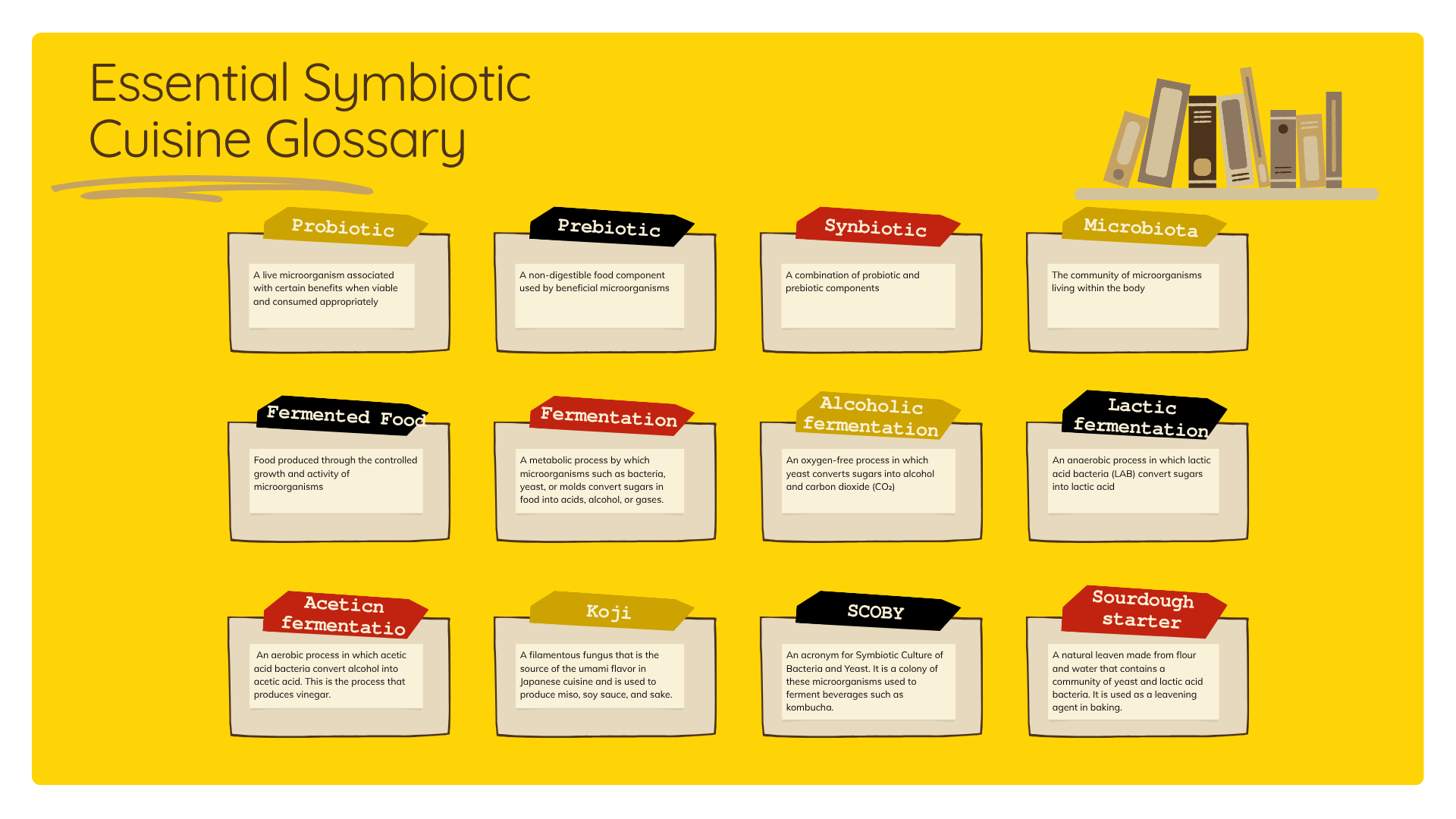
A Quick Glossary of Symbiotic Cuisine
FAQ for Independent Food Business Owners in the U.S.
How much does it cost to introduce fermented products into a restaurant?
Costs vary by process. Calculate ingredients, labor, containers, refrigeration, waste, storage, monitoring and staff training before setting menu prices.
How can I determine whether a symbiotic dish is profitable?
Measure portion cost, labor, yield, waste and selling price. Then confirm that the dish can be produced consistently during high-volume service.
Do fermented foods require special food-safety procedures?
Yes. Fermentation requires documented sanitation, time, temperature, storage, traceability and discard procedures compatible with the regulations that apply to your operation.
Can I claim that my probiotic product improves gut health?
Health claims may be regulated. Review labeling requirements, supporting evidence and applicable U.S. regulations before making specific functional or therapeutic statements.
The Future of Gastronomy Runs Through the Gut — But the Business Still Runs on Systems
Symbiotic cuisine creates a space where nutrition, flavor development, fermentation, sustainability, and culinary innovation can come together.
That does not automatically make every probiotic concept a good business.
The opportunity lies in translating those ideas into products that are desirable enough to generate demand and structured enough to survive real service conditions.
A strong Symbiotic Cuisine concept can use fermentation to build flavor, prebiotic ingredients to expand nutritional positioning and smarter processes to convert basic ingredients into products with greater perceived value.
Scaling it requires something else: standardized recipes, technical sheets, unit economics, food safety protocols, team training and infrastructure capable of supporting additional volume.
That is where Flavor Connection fits into the equation.
Not simply as access to professional commercial kitchens, but as a platform where culinary ideas can be developed into executable food businesses through infrastructure, R&D, menu development, operational optimization and financial analysis at the product level.
If you are developing a food concept and want to turn culinary innovation into an operation designed for growth, Flavor Connection can help you build the infrastructure, product and operating model required for the next stage.
The future of food may be more symbiotic, sustainable and intentional. The businesses positioned to lead it will also make it profitable, repeatable and scalable.
We are what we eat — and what our microbiome eats.

