
More Than a Label: The Name as a Business Strategy
Think of the menu as your restaurant’s business card. Each name is a miniature advertisement. A well-chosen name fulfills multiple strategic functions:
- Justifies Value: A «Wild Mushroom and Black Truffle Risotto» suggests higher-quality ingredients and a careful process more than a simple «Mushroom Rice.»
- Guides the Experience: It orients the diner, manages their expectations, and creates anticipation.
- Reinforces Brand Identity: A fusion taco truck will have very different names than a French artisan bakery. Consistency builds personality.
- Drives Sales: An evocative and clear name can be decisive when choosing between two similar dishes. It’s the first step in the customer’s sensory journey.
The process of naming dishes should therefore be approached with the same seriousness as pricing or marketing strategy.
The Science and Art Behind a Good Name
Successfully naming dishes lies in the balance between the concrete (the science) and the evocative (the art). Science demands clarity and precise description to avoid confusion. Art invites us to touch a emotional chord, tell a story, and spark the imagination. The trick is to serve them on the same plate.
Key Elements Every Name Should Communicate
When facing the blank page to start naming dishes, ensure your proposal integrates most of these conceptual ingredients:
1. Authenticity

The name must be an honest reflection of what you serve and who you are. Don’t promise «Flavors of Tuscany» if your technique or ingredients don’t back it up. Authenticity builds trust. A name like «Grandma’s Stew» communicates tradition and culinary honesty.
2. Descriptive Structure (Clear and Concise)
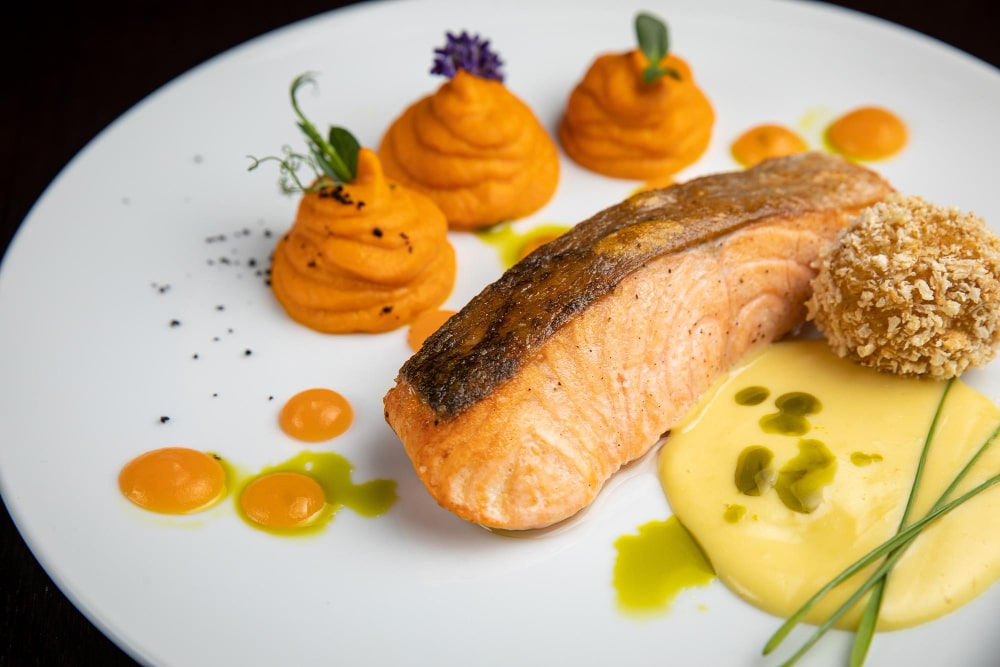
The customer must understand what they are ordering. Combine the descriptive with the creative. The classic formula is: Main Ingredient + Technique/Origin/Key Adjective. Example: «Honey-Glazed Salmon with Smoked Sweet Potato Purée.» It’s specific, appetizing, and clear. When naming dishes, this structure is your best friend.
3. Ability to Awaken the Senses
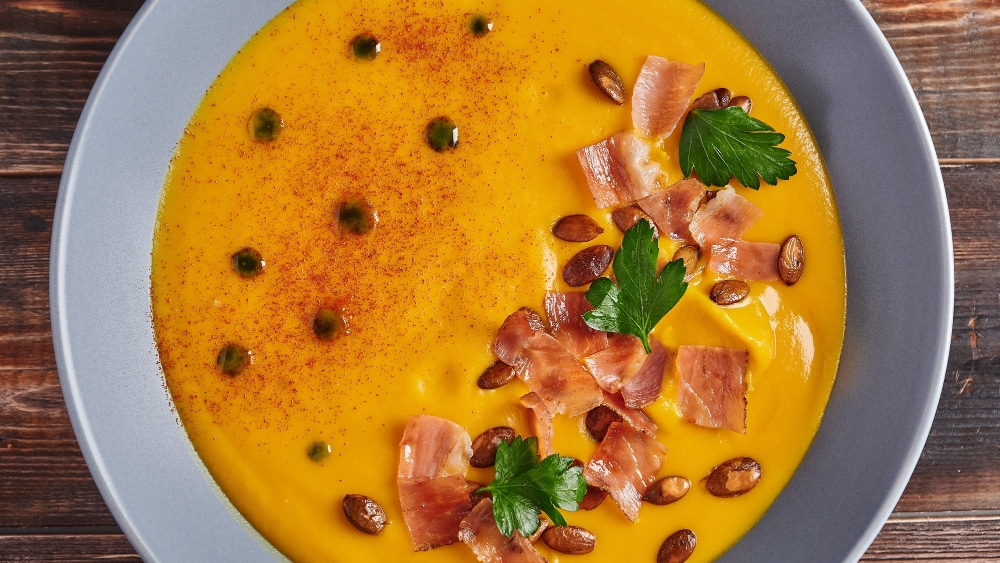
Use words that activate sensory memory. Talk about textures («crispy,» «silky»), temperatures («warm,» «melting»), sounds («sizzling»), and, above all, flavors («umami,» «citrusy,» «toasted»). «Butternut Squash Cream with Crispy Bacon and a Hint of Ginger» paints a richer picture than «Squash Purée.» Effective naming dishes strategy always considers sensory appeal.
4. Origin or Tradition
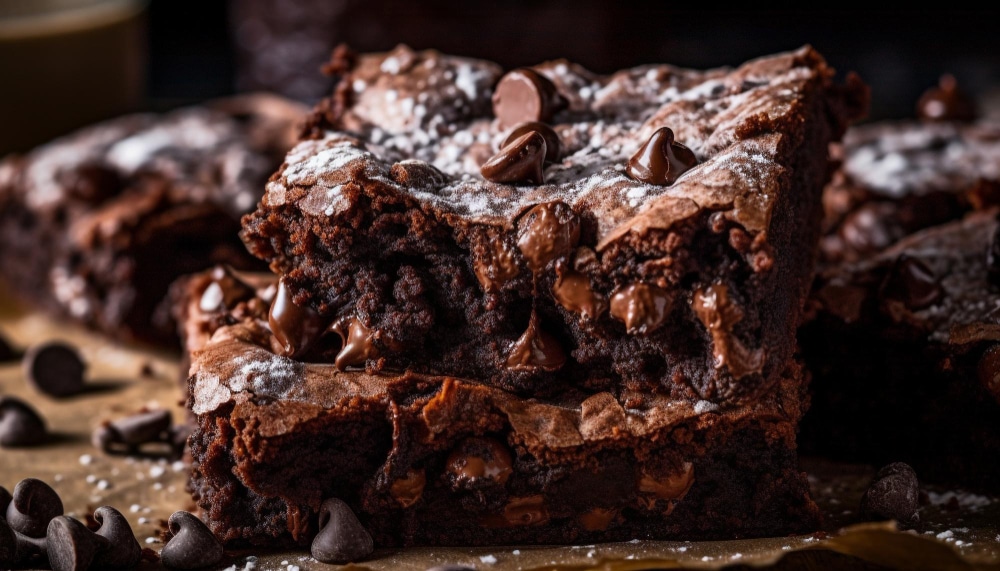
Anchoring a dish to a place or cultural heritage adds depth and storytelling. «Arepa Reina Pepiada» (Venezuela), «Steamed Bao with Char Siu Pork» (China), «Brooklyn-Style Brownie.» This educates the diner and validates the offering.
5. Emotion and Nostalgia
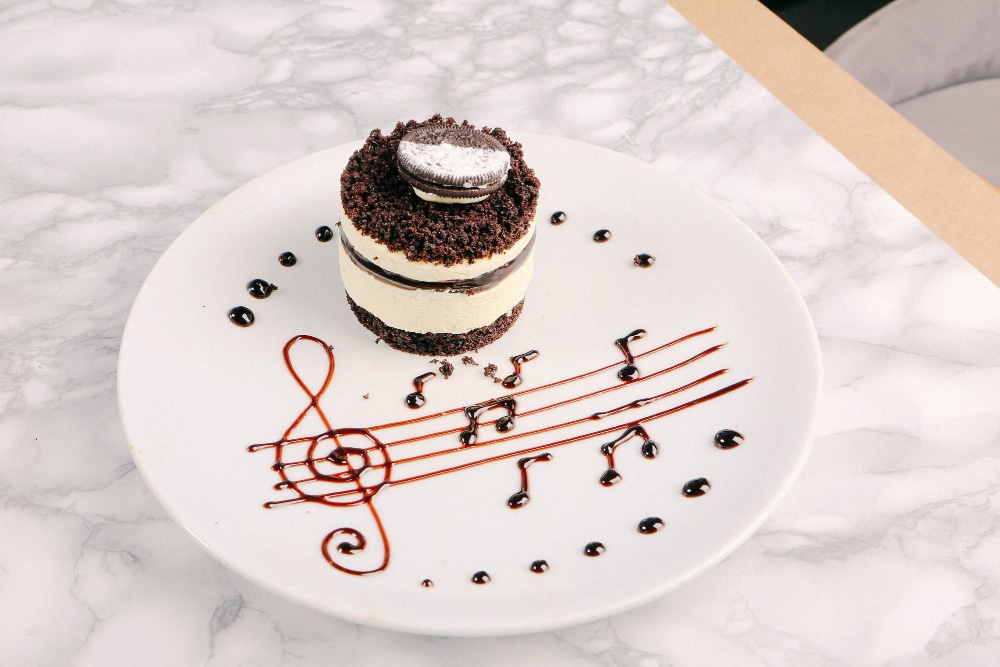
Connect with universal memories and emotions. Names like «Comforting Chicken Soup,» «Happiness Cake,» or «Nostalgia Chocolate» appeal directly to the mood they aim to evoke. The psychology of naming dishes is powerful here.
6. Gourmet Focus (when applicable)
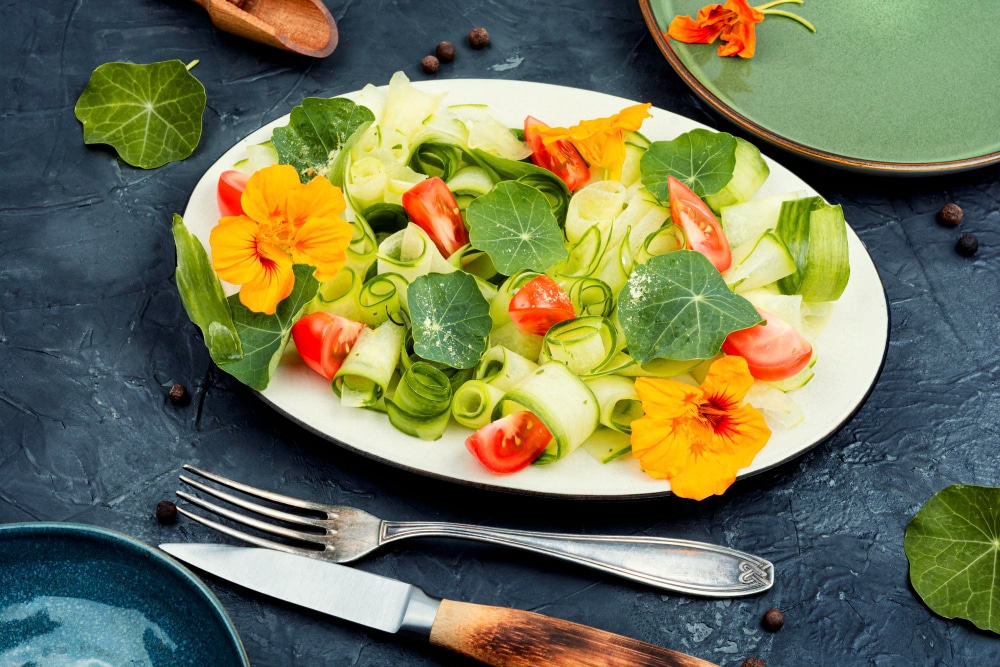
For high-end businesses, names can be more abstract and poetic, focusing on the experience or the chef’s inspiration. «Melody of the Sea» for a fish crudo, or «Sunset in the Garden» for a salad with red berries and edible flowers. Here, presentation and service must uphold the promise of the name.
The Creative Process: How Do Chefs Name Their Dishes?
The methodology for naming dishes is usually not a moment of divine inspiration, but a structured process:
- Define the Dish’s Essence: What is the star ingredient? What defining technique was used? What emotion or memory does it evoke?
- Free Brainstorming: Write down all associated words: ingredients, textures, places, sensations, personal stories.
- Apply the Structure: Combine the best words into descriptive formulas (Ingredient + Technique + Detail).
- Sound and Readability Test: Is it easy for the server to read? Is it easy for the customer to pronounce and remember? Avoid tongue twisters.
- Testing with Team and Pilot Customers: Get feedback. Does the name generate curiosity? Is it understood what the dish is?
- Menu Integration: Verify that the name fits the overall personality of the menu and the brand.
This systematic approach to naming dishes ensures consistency and effectiveness across your entire menu.
Common Mistakes (What to Avoid When Naming Dishes)
When naming dishes, certain pitfalls can undermine your efforts:
- Generic or Vague Names: «House Specialty,» «Dish of the Day.» They communicate nothing and are missed opportunities.
- Being Too Pretentious or Cryptic: «Oneiric Deconstruction of the Countryside.» Can generate confusion or skepticism if the dish doesn’t support it.
- Misleading the Customer: Calling a dish «lasagna» without pasta or «truffle» for an artificial flavor. Destroys trust.
- Excessively Long Names: Make the menu hard to read and complicate communication in the kitchen/dining area.
- Ignoring the Target Audience: A name full of technical culinary jargon won’t work in a family business.
Psychology and Marketing Applied to Gastronomic Naming
The art of naming dishes draws heavily from psychology and marketing principles:
- Effect of Sound: Soft sounds (l, m, n, s) can convey delicacy, while sharp sounds (k, t, p) suggest freshness or crunch. «Mousse» vs. «Crackers.»
- Principle of Scarcity and Exclusivity: «Chef’s Limited Creation,» «Seasonal…» create urgency and value perception.
- Appeal to Authority: «According to the traditional recipe of…», «Selection from local producer X» add credibility.
- Storytelling: A name that tells a brief story («The Cake That Won the 1987 Contest») generates connection and is more memorable.
Understanding these principles is crucial for naming dishes that sell.
How to Adapt the Name According to Your Type of Business
The strategy for naming dishes must align with your business model and customer. Here’s how to approach naming dishes across different formats:
Food Trucks and Street Stalls
Fun, witty, and direct names. Wordplay, pop references. E.g., «The Notorious P.I.G.» (for a pork sandwich), «Rocket to Greens» (salad). The approach to naming dishes here is bold and attention-grabbing.
Dark Kitchens and Delivery Services
Absolute clarity is key. The customer orders online without seeing the dish. Names must be ultra-descriptive and optimized for search («Salmon and Avocado Poke Bowl»). When naming dishes for delivery, think like a search engine.
Bakeries and Patisseries
Here, nostalgia and hedonism reign. Evocative, sweet, and sometimes personal names («Grandma Rose’s Macaron,» «Salted Seduction Brownie»).
Catering Services and Events
Professional elegance and clarity. Names should sound appetizing on a printed menu and reflect the event’s sophistication («Canapé of Tuna Tartare with Citrus»).
Cafés and Ice Cream Parlors
Playful and descriptive creativity. For ice cream: «Bourbon Vanilla with Crunchy Toffee.» For coffee: «Australian Flat White» or «Spiced Carajillo.»
Niche Businesses (Vegan, Gluten-Free, etc.)
The name should highlight key benefits or ingredients in a positive way («Impossibly Juicy Burger,» «‘No-Guilt’ Chocolate Cake»).
Final Checklist
Before approving a dish name, ask:
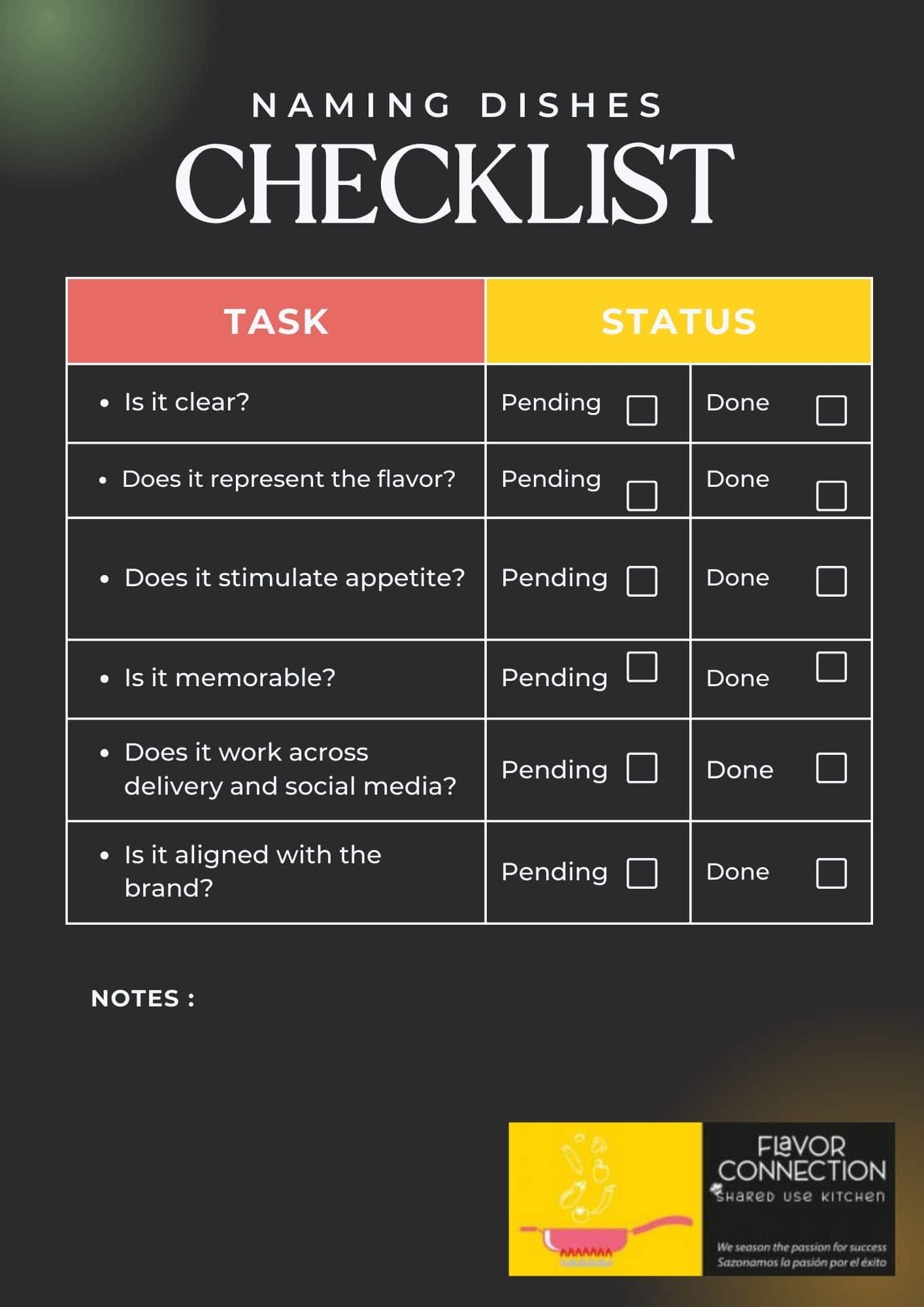
A checklist helps you name dishes with more precision and coherence.
Conclusion
Naming dishes is an exercise in strategic creativity. It’s the bridge between the chef’s vision and the diner’s mind. Don’t underestimate the power of a few well-chosen words. They invite you on a journey, tell your story, and, ultimately, are the first thing to be «savored.»
Invest time in this process of naming dishes. Try, adjust, and observe your customers’ reactions. At Flavor Connection, we believe that a menu with well-crafted names not only sells more, but also elevates the entire experience of your culinary brand. Now, go and give your creations the names they deserve. Mastering the skill of naming dishes will differentiate your business in a saturated market.

