
Selling More Does Not Always Mean Making More
A record sales month does not automatically mean a profitable month.
As volume grows, complexity starts hiding costs. The problem appears when a sale can no longer be connected precisely to its recipe, inventory usage, and contribution margin. That is when the Menu SKU stops being an administrative code and becomes a management tool.
The strategic question is no longer simply, “What are we selling?” It becomes: What are we selling profitably, consistently, and in a way that can be replicated?
If you cannot connect a sale to its real cost, you do not only have an inventory problem. You have a visibility problem.
What Is an SKU and Why Does It Matter?
SKU stands for Stock Keeping Unit: a unique identifier used to distinguish a product, variant, combo, or internal reference that needs to be tracked separately.
In food businesses, its value becomes clear when similar products consume different ingredients, require different labor, or generate different margins. A Menu SKU creates a stable reference connecting a sale to its recipe, inventory usage, and financial performance.
Table 1. From Order to Margin: What Changes With a Structured SKU
Stage |
Without a Structured SKU |
With a Structured SKU |
|---|---|---|
| Sale | “A burger was sold” | BUR-DBC-01 was sold |
| Recipe | Approximation | Standard recipe attached |
| Inventory | Manual adjustment | Traceable consumption |
| Food cost | General average | Cost by item |
| Margin | Estimate | Margin by product |
| Decision | Intuition | Comparable data |
A Menu SKU moves the operator beyond total sales and toward understanding which items actually contribute to business performance.
How It Works in Dark Kitchens, Bakeries, and Catering
In a dark kitchen, a Menu SKU can create one operational language across the POS, Uber Eats, DoorDash, and the assembly station. If a variation uses a different protein, package, or price point, it should be identified consistently across channels.
In bakeries and pastry operations, SKUs can distinguish flavor, weight, format, and presentation. They can also extend to semi-finished components such as creams, doughs, or fillings when that level of control adds value.
This strengthens inventory control using SKUs in pastry shops and makes it easier to compare theoretical yield with actual production.
An SKU becomes valuable when it stops living in a spreadsheet and starts connecting recipes, inventory, sales, and production.
Why SKUs Matter When the Business Starts to Scale
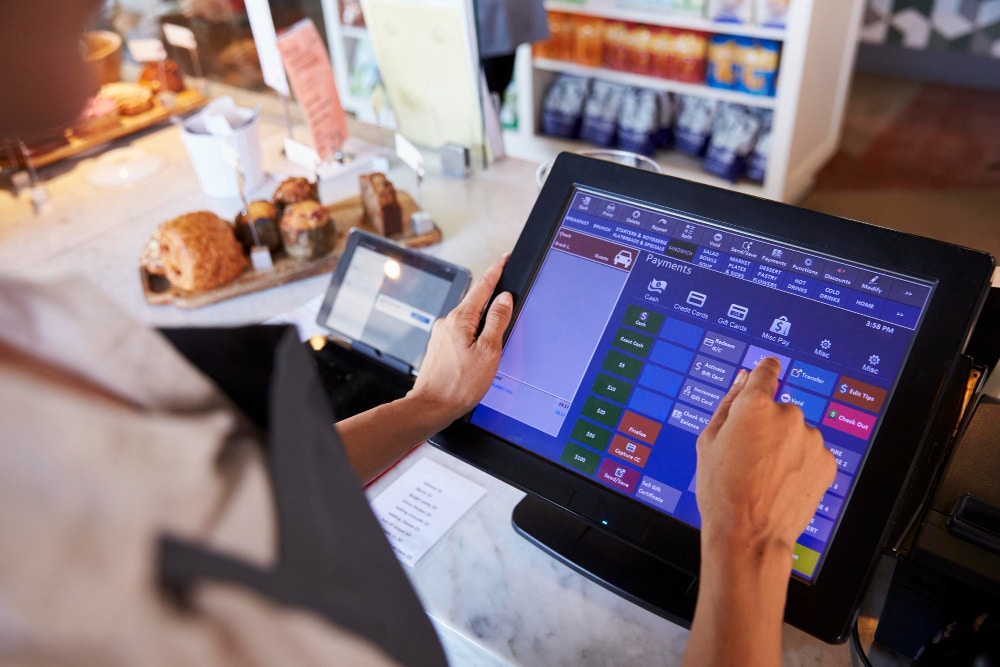
The first benefit is financial. If each Menu SKU is linked to a standardized recipe, you can compare selling price, food cost, and contribution margin by item.
That exposes a common problem: products with strong sales but weak profitability because ingredient cost, labor, packaging, or waste is too high.
The second benefit is operational. A larger team or second location needs a common language for identifying what is made and sold.
The third benefit is strategic. SKU-level data strengthens menu engineering and helps determine which items should be promoted, repriced, simplified, reformulated, or removed.
Table 2. Decisions SKU Data Can Improve by Business Model
Business Model |
Common Problem |
Better Decision |
|---|---|---|
| Dark kitchen | Variants differ across channels | Standardize and simplify |
| Bakery / pastry | High ingredient cost and waste | Adjust format and pricing |
| Catering | Overproduction by event | Refine quantities per guest |
| Restaurant | High sales with uneven margins | Optimize menu mix |
Practical Examples: How to Structure an SKU
A strong SKU structure for restaurants should be short, logical, and stable. It only needs to identify a reference without ambiguity.
Dark Kitchen / (Burger Joint):
-
Category: Burgers (BRG)
-
Variant: Double Cheeseburger (DCB)
-
SKU:
BRG-DCB-01
Bakery / (Batch Production):
-
Category: Cakes & Pastries (CAK)
-
Flavor/Type: Chocolate Hazelnut (CHN)
-
Format: Family Size 1.5kg (FAM)
-
SKU:
CAK-CHN-FAM-01-DBC-01
Catering / (Event Menu):
-
Category: Finger Foods / Appetizers (APP)
-
Type: Cheese Tequeños / Cheese Sticks (TEQ)
-
Packaging: Frozen 50-Pack Tray (P50)
-
SKU:
APP-TEQ-P50
These examples show how to create a food SKU without turning the code into a sentence. Category, variant, and format are usually enough when the naming convention is documented.
A Menu SKU should remain stable even when the customer-facing description changes. Otherwise, historical data becomes fragmented and less useful.
How to Implement SKUs Without Slowing Down the Operation
Implementation should start with an audit of what you actually sell. Before creating codes, identify which variations change recipe, cost, inventory, packaging, or channel.
- Map meaningful products and variants.
- Define simple naming rules.
- Connect each reference to a recipe card.
- Align POS, delivery, inventory, and production.
- Assign responsibility for creating and retiring codes.
For SKUs for Dark Kitchens, consistency is especially useful when the same product appears across multiple delivery platforms. A common structure prevents different commercial names from becoming different internal products.
A well-designed Menu SKU system should make operations easier to read, not harder to manage.
Recommendations to Keep the System Manageable

More codes do not automatically create more control. A Menu SKU should exist when a difference deserves to be measured independently.
Avoid obscure abbreviations, excessively long codes, and references built around temporary promotions. Do not reuse the SKU of a discontinued item because preserving history is essential for meaningful comparisons.
Design for the next stage. If you plan to open another location, add catering, introduce seasonal lines, or launch a new concept, the system should absorb that growth without a complete rebuild.
Frequently Asked Questions About Food SKUs
Do I need special software to start using SKUs?
No. Start with a documented structure, then connect it to your POS, inventory platform, or ERP when automation becomes worthwhile.
Does every ingredient need its own SKU?
Not necessarily. Create ingredient-level SKUs when you need tighter control over purchasing, traceability, production, costing, or consumption.
Should delivery modifiers have their own SKUs?
Only when they materially change price, inventory, packaging, or production. Coding every preference can create more complexity than useful insight.
Can SKUs show which menu items are truly profitable?
Yes, when connected to recipes, costs, and sales. Operators can compare food cost, price, volume, and margin by item.
From an Intuitive Menu to a Business That Can Be Replicated
Growth is not only about selling more. It is about knowing which sales create margin and which processes can be repeated without losing consistency.
When the Menu SKU connects the sale, recipe, inventory, and cost, the menu becomes a source of information for pricing, purchasing, production, and investment decisions.
That same principle shapes how Flavor Connection approaches scalability. More square footage, equipment, or production capacity cannot fix a business model that lacks operational discipline.
Infrastructure creates more value when it works together with standardized recipes, R&D, cost control, unit economics, and data-driven decisions.
Our role is to support that transition as an operating partner, combining culinary infrastructure with practical business knowledge so founders can turn a strong food concept into a more consistent, profitable, and scalable operation.
Ready to turn menu innovation into a profitable, scalable business model? At Flavor Connection, we provide the culinary infrastructure and operational flexibility your brand needs to grow with control. [Click here to schedule a strategic tour of our facilities and discover the space where your next concept can scale.]

